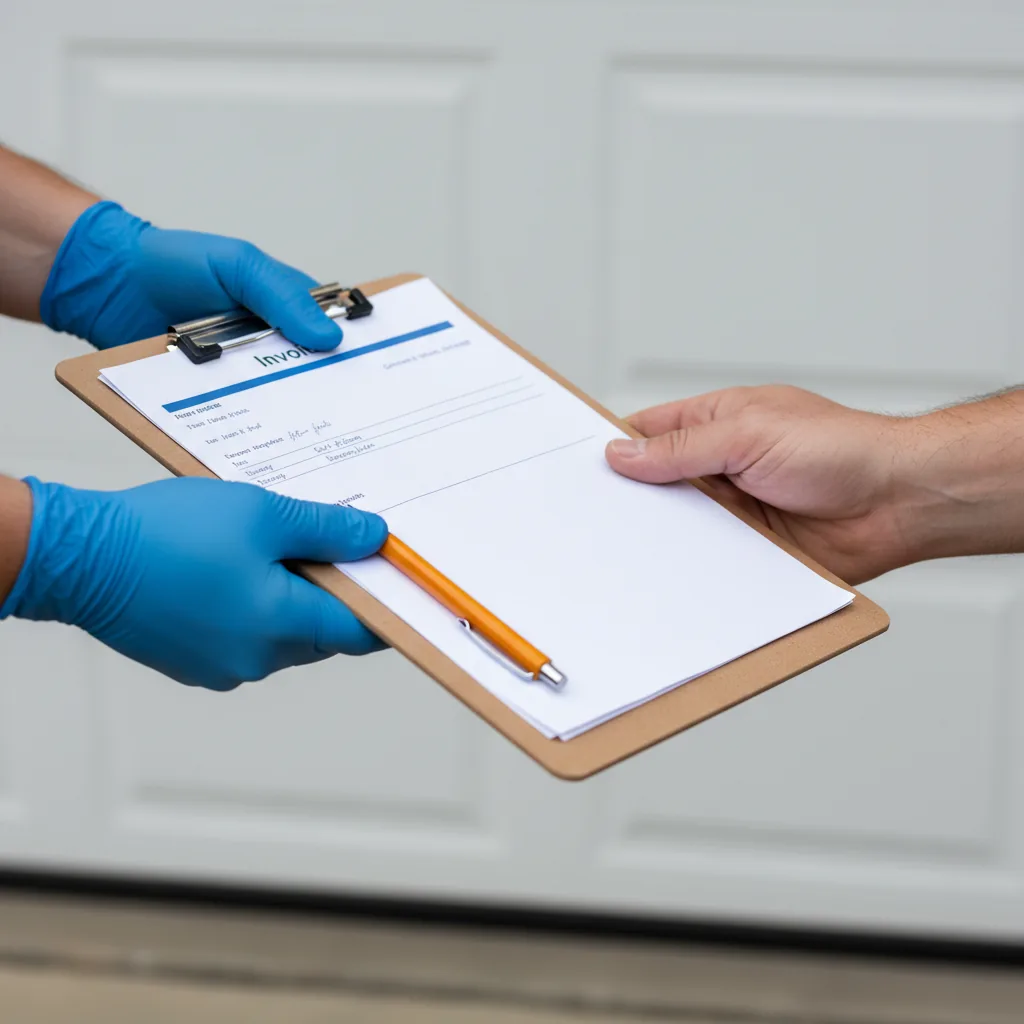
A garage door has about 300 moving parts and runs four to six cycles a day, every day, in a climate that swings from negative 20 to plus 90. An annual tune-up catches the worn roller, the loose hinge bolt, or the cable starting to fray, before it strands you in a snowstorm at 6 am. We do a 30-point inspection, lubricate everything that moves, check spring balance, adjust the opener force settings, and align the photo-eye sensors. Flat $129. Most tune-ups take 45 to 60 minutes.
Annual Garage Door Tune-Up pricing: Annual tune-up is $129 flat for any standard residential door. That covers the 30-point inspection, lubrication of all rollers, hinges, and bearings, balance check, photo-eye alignment, and opener force adjustment. If we find something that needs replacing during the visit, we'll quote it before we touch it. No surprise charges, no upsell pressure.
We start by running the door through a full cycle and watching. Where does it hesitate? Where does it sound dry? Then we get hands-on. Every roller bearing gets cleaned and lubricated with a non-petroleum garage door lube (WD-40 attracts dust and gums things up, so don't use it). Hinge bolts get checked for tightness, since they back out a quarter turn at a time across a year of cycles. We check cable wraps on the drum and look for unraveled strands, fraying, or rust. Spring tension gets verified by lifting the door to the halfway point and seeing if it holds. If it drifts down, we add a quarter turn. Photo-eye sensors get cleaned and re-aligned if they've drifted. Opener force settings get re-tested against the safety reverse spec. Last step is cleaning weatherstripping on the bottom panel and replacing it if it's cracked, which it usually is by year three in Wisconsin.
Most tune-ups run 60 to 90 minutes on site. That covers the 30-point inspection (springs, cables, rollers, hinges, tracks, opener, photo eyes, weatherstripping, manual release), lubrication of all moving parts with the right grease (not WD-40, which strips lubricant), tightening every bolt on the door and tracks, adjusting opener force and travel limits, balancing the door at the midpoint, and a final 10-cycle test. The $129 flat fee covers the visit and the inspection. If we find anything that needs parts, we quote you on site before doing the work.
Yes, materially. Doors that get a yearly tune-up routinely run 15 to 20 years on the original springs and 12 to 15 years on the original opener. Doors that never get serviced often need spring replacement at 6 to 8 years and opener replacement at 10. The math works out because lubrication keeps the bearings, hinges, and roller stems from grinding metal-on-metal, and tightening bolts before they back out keeps the door square in the tracks. The $129 tune-up usually pays for itself the first time it catches a fraying cable before it snaps.
Yes. Every tune-up ends with a written report showing each of the 30 inspection points and a condition rating (good, monitor, replace soon, replace now). The report includes the rough cost to address anything in the bottom two categories so you can budget. We leave you a paper copy and email a PDF. Customers who sell their homes inside a year sometimes use this report as a maintenance record for the buyer; we've had real estate agents specifically ask for it. The report is also useful for insurance claims if something breaks later.
We tell you on site, explain what it is, and quote the repair before doing anything. The tune-up fee stays at $129 regardless of what we find. If you want the repair done that day and we have the parts on the truck (we usually do for springs, cables, rollers, and common opener parts), we'll do it on the same visit. The diagnostic fee is waived because we're already there. If you'd rather think it over, no pressure; the written report has the pricing and you can call us back any time.
We do tune-ups year-round. That said, fall (September through early November) is the ideal window because we catch anything that would fail in deep winter when cold steel is brittle and spring failures triple. Spring (April through May) is the second-best window because we catch anything beaten up by the Wisconsin winter you just survived. We don't recommend booking tune-ups in January or February because lubricants don't seat well below 20 degrees and the inspection is less thorough. Book by mid-October to get on the fall schedule.
Yearly is the right cadence for most Madison-area households. Twice a year (fall and spring) makes sense for heavy doors (16-foot double), high-cycle households (more than six openings a day), or any door past the 10-year mark. Every-other-year is acceptable for low-use single 9-foot doors in heated garages, but we'd rather see you yearly. The $129 fee is the same either way, and the labor savings on a caught-early issue (re-tightening a center bearing for $40 versus replacing a stripped shaft for $280) more than pays for the visit.